

Canada’s reputation for multiculturalism has reached new heights with record-breaking immigration rates in recent years. The evolving demographic, shaped by people from diverse countries and cultures, is giving rise to a unique group known as ‘Third Culture Kids‘ (TCKs), a term coined by American sociologist-anthropologist Dr. Ruth Hill Useem in the 1950s and famously associated with former U.S. President, Barack Obama. I, too, personally identify with this term, having experienced the profound impact of being raised in a culture different from that of my parents and navigating a mosaic of cultural influences during my formative years.
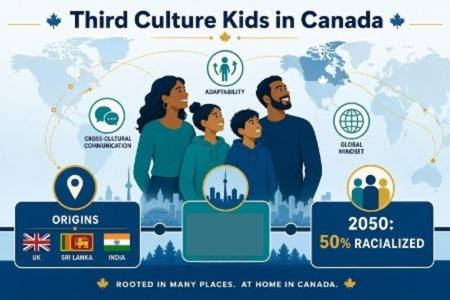
While multiculturalism has long been a hallmark of Canada, the surge in immigration is expected to elevate the number of individuals who resonate with the label of third culture kid. Projections suggest that racialized communities in Canada will comprise over 50 per cent of the population by 2050, emphasising the growing significance of understanding and appreciating the experiences and perspectives of TCKs and the benefits they can bring to Canadian society.
Key Takeaways
- TCKs develop cultural adaptability and open-mindedness through early exposure to multiple traditions and social norms. They’re shaping Canada’s multicultural identity by promoting inclusivity and bridging cultural gaps.
- Third Culture Kids (TCKs) are individuals raised in cultures different from their parents, influencing their identity and worldview.
- Canada’s increasing multiculturalism and immigration growth are expanding the TCK population significantly by 2050.
- Third Culture Kids (TCKs) are individuals raised in cultures different from their parents, influencing their identity and worldview.
- Canada’s increasing multiculturalism and immigration growth are expanding the TCK population significantly by 2050.
- TCKs develop cultural adaptability and open-mindedness through early exposure to multiple traditions and social norms. They’re shaping Canada’s multicultural identity by promoting inclusivity and bridging cultural gaps.
What Does It Mean to Be a Third Culture Kid?
But what does it truly mean to be a third culture kid, and what value does this identity bring? We are commonly referred to as individuals who, often from an early age, have been immersed in various cultural environments and countries, usually growing up in a culture or society different from our parents, having to adapt to the influences of our parents while simultaneously acclimating to the societies in which we are raised. Childhood, for us TCKs, can be marked by a sense of confusion and feeling ‘different’ as we are constantly navigating varied cultures and customs. However, being raised as a TCK can have many benefits.
One of the significant advantages of being a third culture kid is the early exposure to many cultures, which often shapes our worldview and can even influence the trajectory of our lives. We find ourselves balancing the nuances of different traditions, languages, and social norms. This often nurtures a sense of open-mindedness and curiosity. We approach new experiences with a genuine interest in understanding and learning from the perspectives of others. This curiosity drives continuous personal and intellectual growth, propelling us to seek opportunities that expand our cultural horizons. This fluidity we’ve developed in understanding and respecting diverse cultural perspectives sets the stage for our unique skills, a driving force for our personal and professional lives.
I was born in London to Sri Lankan parents. My upbringing involved living in London, Sri Lanka, and India and eventually settling in Canada at the age of seven. Post-university, I was fortunate to embark on a 12-year journey, living and working between Bangladesh, India, Sri Lanka, Malaysia, France, and England, before returning to Canada and making Toronto my permanent home in 2012. Immersing myself in such diverse cultures and countries has proven invaluable in navigating the intricacies of multiple societies and the increasingly globalised business environment.
The Cultural Intelligence Advantage: How TCKs Shape Canada’s Future
For me, the Cultural Intelligence developed through navigating different cultures has been a key asset. The ability to seamlessly accustom ourselves to different cultural contexts is a skill many third culture kids carry into adulthood. For me, this adaptability has been a key asset in my professional journey, allowing me to thrive in diverse work environments and connect with colleagues and clients from around the globe.
Our heightened cultural sensitivity enables us to seamlessly navigate social landscapes, embracing diversity as a natural aspect of our daily interactions, making us adept communicators and collaborators in an increasingly interconnected world.
As Canada continues to evolve into a multicultural powerhouse, the growth of third culture kids and the experiences they bring will become increasingly relevant and a significant asset for our society. Many newcomer children will have been immersed in at least two cultures, and second-generation Canadians often navigate between their parents’ culture and Canadian society. Our cultural adaptability, global perspectives, and effective cross-cultural communication will contribute significantly to the social and professional landscape of the country. Understanding and celebrating the unique journey of third culture kids is not just an acknowledgment of our diverse backgrounds but an investment in the richness of Canada’s collective identity.
Conclusion
Third culture kids aren’t just a demographic trend – they’re a lived experience, and one that’s becoming increasingly central to what Canada is. Especially as they’re now becoming Third Culture Leaders. Growing up across multiple countries shaped how I see the world, how I navigate difference, and how I find common ground with people from vastly different backgrounds. That’s not unique to me. Millions of Canadians carry this same layered identity.
As immigration continues to reshape this country, the TCK experience deserves more than acknowledgement – it deserves genuine curiosity. Understanding how these individuals think, adapt, and contribute is one of the more useful tools we have for building workplaces, communities, and conversations that actually work across cultures. That’s not a soft idea. It’s a practical one.
FAQs
Third Culture Kids (TCKs) frequently encounter challenges related to identity and belonging. Growing up in multiple cultural contexts can lead to feelings of alienation, as they may struggle to fit into any one culture completely. TCKs often grapple with a sense of not being fully accepted in their parents’ culture or in the culture of their peers. This can result in issues such as social anxiety, difficulty forming deep connections, and a continuous challenge in defining their identity amidst various cultural influences.
The educational experiences of Third Culture Kids can be quite unique. Many TCKs benefit from diverse perspectives that enhance their learning. However, they may also face disruptions when moving frequently, leading to challenges in academic continuity. Additionally, TCKs may experience difficulties in adapting to new educational systems and curricula. The need for cultural sensitivity in schools is essential to support the unique needs of TCKs, enabling them to thrive both academically and socially.
Third Culture Kids typically develop exceptional cross-cultural communication skills, adaptability, and a global mindset, which are highly advantageous in today’s interconnected workplace. Their experiences allow them to navigate diverse environments with ease, fostering teamwork and collaboration across cultural boundaries. TCKs often demonstrate creativity in problem-solving, as they synthesize various cultural perspectives, which contributes valuable insights in innovative processes. These skills make TCKs desirable candidates in global industries and multicultural teams.
Yes, Third Culture Kids play a significant role in shaping societal perspectives on multiculturalism. Their unique experiences provide them with insights and understanding that can help foster greater inclusivity and acceptance within diverse communities. By sharing their stories and challenges, TCKs can educate others on the richness of cultural diversity, promote empathy, and advocate for social cohesion. Their presence in society can bridge cultural gaps, ultimately contributing to a more harmonious understanding of multicultural interactions.
To support Third Culture Kids in the workplace, employers can implement cultural competence training and encourage an inclusive work environment. Offering mentorship programs that connect TCKs with employees from diverse backgrounds can facilitate better understanding and integration. Additionally, flexibility in policies related to relocation and cultural practices can help TCKs feel more at home. Recognizing and embracing the unique contributions of TCKs can enhance workplace dynamics and foster a richer collaborative atmosphere.
Yes, the increasing prevalence of Third Culture Kids is likely to significantly change the landscape of Canadian society. As TCKs grow and contribute to various sectors, their diverse backgrounds and perspectives will enrich cultural dialogue and innovation. By integrating their experiences into the fabric of Canadian identity, TCKs can help foster a society that values diversity and inclusion, ultimately shaping public policies, educational frameworks, and community dynamics in a way that reflects Canada’s multicultural ethos.