
Third Culture Leadership
You don’t have to grow up between worlds to lead in more than one.
You just need to think like someone who did.
Third culture leadership is the ability to lead across cultures, identities, markets, and systems without treating one worldview as the default. It turns cross-cultural experience into practical capabilities: reading context, translating meaning, building trust, and adapting without losing yourself.
Third culture kids (TCKs) and third culture individuals (TCIs) often develop these instincts early because moving between worlds forced them to observe, recalibrate, and belong in more than one place. But lived experience alone is not leadership. Reflection, Cultural Intelligence, and deliberate practice make the advantage usable.
The mindset is available to anyone. You do not need an international childhood. You need the curiosity to question your frame, the discipline to read the room, and the courage to change how you lead when the context changes.
The room is global now, even when the team isn’t.
A leader can be sitting in one city while managing remote colleagues, newcomer talent, diaspora communities, international partners, and customers whose expectations were shaped somewhere else. The challenge is no longer whether cultural difference is present. It is whether the leader can understand what that difference changes.
Third culture leaders have spent years doing exactly that. They learn that trust does not look the same everywhere, that a clear message can still land badly, and that belonging does not require one fixed cultural home. With reflection and discipline, those lessons become a leadership advantage.
What Is Third Culture Leadership?
Third culture identity is a lived experience. Third culture leadership is what someone learns to do with it.
The Definitions
A third culture kid (TCK) is a person whose formative years were shaped by living in cultures beyond their parents’ home or passport culture. “Third culture” is the blended frame that develops between the culture of origin and cultures in which a person grows up.
A third culture individual (TCI) is the broader adult expression of that experience. Some TCIs moved across countries as children. Others developed a similar cross-cultural identity through migration, diaspora life, sustained international work, or deep immersion in more than one cultural system.
Third culture leadership is what happens when that cross-cultural experience becomes applied capability. It is the ability to notice patterns, translate meaning, build trust, and make decisions across difference without assuming one cultural frame is neutral or universal.
That distinction matters. Third culture identity is a lived experience. Third culture leadership is what someone learns to do with it.
"The lived experience is the raw material. Leadership is what you build with it."
Muraly Srinarayanathas describes the relationship this way: “Third culture is the lived lens. Cultural Intelligence is the learnable skill.” Third culture leadership sits where the two meet. The lens helps a leader notice what others may miss. Cultural Intelligence helps make that instinct conscious, repeatable, and useful.
Third Culture Is Not “In-Between.” It Is an Advantage.
Third culture identity is often described through loss: rootless, split, never fully from here or there. That experience can be real. But it is only half the story.
Repeatedly entering new cultural systems forces a person to watch before acting. They learn to scan for signals, test assumptions, shift language, and understand how quickly meaning changes. The instability is the challenge. The pattern recognition can become the advantage.
Many leadership failures are not failures of intelligence, effort, or intent. They are failures of context. A leader assumes directness signals honesty. A colleague reads it as disrespect. A company imports a proven market strategy. Local customers read it as proof the company never bothered to understand them. A team invites diverse perspectives, then rewards only the people who communicate in the dominant style.
Third culture leadership interrupts that default. It asks a better first question: What is happening here that my own frame may not explain?

Belonging can be plural. So can leadership.
The four capabilities third culture leadership builds
Third culture leadership is not one personality trait. It is a group of capabilities that tend to develop together through repeated adaptation.
When you have lived inside different rules for authority, trust, time, family, and communication, you become less likely to mistake your own rulebook for reality. Third culture leaders notice who speaks first, who stays quiet, what is said indirectly, and which expectations are being treated as obvious.
People who move between cultures often become translators before they have a title for it. In leadership, this becomes the ability to close the gap between what was said and what was understood. A message is not successful because it was delivered clearly. It is successful because the intended meaning landed.
Trust is cultural. In one setting it may be built through speed, competence, and direct answers. In another it may begin with time, hospitality, relationship, or respect for hierarchy. Third culture leaders pay attention to what credibility looks like in the room they are actually in.
This is the dimension includes how you communicate, the pace at which you move, the way you frame requests, how you handle silence, and the micro-adjustments you make without thinking when you are paying attention.
If you can't translate your message, you can't scale it.
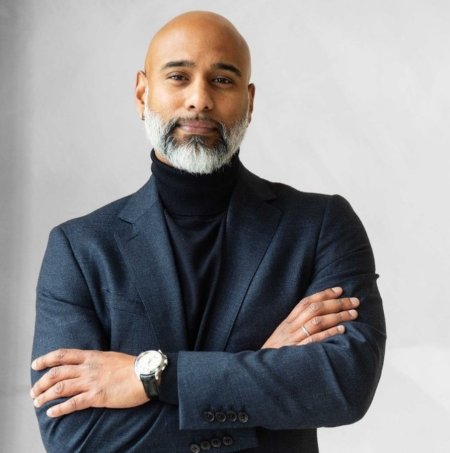
Muraly’s Third Culture Lens
Muraly Srinarayanathas was born in London and raised across Sri Lanka, India, and Canada. By the age of seven, he had already lived on three continents. He learned early that identity could not be reduced to one country, one community, or one way of seeing the world.
In Winnipeg, arriving as a newcomer, his instinct wasn’t to wait for belonging – it was to bring people together and build something collective, a pattern that still shows up in how he leads today. Years later, running business in Bangladesh, that same instinct got tested from the other side: declining a supplier’s invitation to sit for tea, thinking he was respecting the man’s time, cost him a shipment and taught him that in that room, the relationship had to come before the transaction.
That lived pattern later became the foundation of his work across education, workforce development, media, business, and civic life. His advantage was not that he knew every culture. It was that he had learned never to assume his own perspective was the whole map.
A third culture leader does not arrive with all the answers. They arrive ready to read the room.
What third culture leadership is not
It is not being “worldly.”
Travel can broaden perspective, but exposure without reflection can simply reinforce old assumptions in new places.
It is not cultural shape-shifting.
Adapting your behaviour is different from erasing yourself. Strong third culture leaders stay anchored while widening their range.
It is not automatic Cultural Intelligence.
A cross-cultural biography can provide raw material, but Cultural Intelligence must still be developed, tested, and made deliberate.
It is not a new label for diversity.
Diversity describes who is present. Third culture leadership describes how a person reads, translates, and leads across different frames.
It is not reserved for TCKs.
People who did not grow up between worlds can develop the same mindset by building curiosity, contextual awareness, and adaptive practice.
in practice
What third culture leadership looks like
In Global Teams
A third culture leader does not treat the dominant communication style as the neutral one. They create more than one way to contribute, pay attention to who is being interpreted as confident or capable, and distinguish silence from disengagement.
In Workforce and Talent Decisions
Newcomer and diaspora talent is often underestimated because unfamiliarity with one system is mistaken for lack of capability. Third culture leaders are more likely to see the difference between a platform gap and a competence gap.
In Communication
They do not confuse clarity with sameness. They ask what must remain consistent and what must flex so the message can be heard. This is the difference between broadcasting a global message and building a genuinely global relationship.
In Market Entry and Expansion
The question is not only whether a product can sell in a new market. It is whether the organization understands how trust, status, buying behaviour, and local meaning shape the decision. Third culture leaders embed before they act.
In Conflict
They are less likely to treat disagreement as a single universal signal. They look for the cultural rules underneath it: who may challenge whom, whether conflict is expressed directly, and what preserving dignity requires.
In Civic and Public Leadership
They recognize that policy and public systems do not land evenly across communities. They look beyond formal access to the cultural, linguistic, and relational factors that determine whether people can actually participate.
THE PRACTICE
How to think like someone who grew up between worlds
Third culture leadership becomes useful when it changes the questions you ask before you decide.
1. Identify the default
What are you treating as obvious because it is normal in your own culture, company, or profession?
2. Separate intent from impact
What did you mean, and what may the other person reasonably have heard? Both matter.
3. Look for the invisible rule
How are trust, hierarchy, time, disagreement, and belonging working in this context

4. Ask before you interpret
Curiosity is not hesitation. It is a faster route to a more accurate decision.
5. Adapt the form, not the principle
Keep your values clear while changing the way they are communicated or enacted.
6. Review what happened.
Cross-cultural effectiveness grows through reflection. Ask what worked, what surprised you, and what you would do differently next time.
The goal is not to know every culture. It is to stop assuming one culture explains everyone.

In Muraly’s work, this is not an abstract identity discussion. It connects directly to workforce development, market expansion, civic leadership, and the practical work of helping people contribute across borders.
The outcome is what he calls Globalized Leaders: people who can move between worlds and lead in more than one.
Why third culture matters now
Organizations already operate across cultures, whether or not they call themselves global. Talent moves. Customers move. Teams span time zones. Diaspora communities shape local markets. Technology compresses distance and speeds up cultural misreads.
Meanwhile, polarization rewards certainty and punishes nuance. Third culture leaders offer something different: the ability to hold more than one truth long enough to spot the pattern, find the bridge, and make a decision that works beyond the loudest voice in the room.
That capability matters in four places where organizations often lose value:
Talent
When unfamiliarity is mistaken for incompetence.
Trust
When leaders use one relationship model across every culture.
Communication
When the message is clear to the sender but distorted for the receiver.
Growth
When global strategy ignores local context until the market rejects it.
Third culture leadership does not remove complexity. It makes leaders more capable inside it.
SUMMARY
The bottom line on third culture leadership
Third culture leadership is the ability to turn cross-cultural experience into better judgment, stronger trust, clearer communication, and more adaptive action. TCKs and TCIs may develop the lens early because life repeatedly required them to move between different systems of meaning.
But the mindset is not inherited and it is not exclusive. Anyone can build it by questioning their default frame, reading context carefully, translating meaning, and reflecting on the difference between intent and impact.
The leaders who do this well are not culturally perfect. They are culturally awake. They know who they are, they remain curious about who others are, and they can build something useful in the space between.
For leaders navigating global teams, international expansion, or multicultural environments, cultural intelligence is the skill that closes the gap between good intentions and real outcomes.
Third culture experience accelerates it. Deliberate practice builds it. The leaders who take it seriously — regardless of background — develop a compounding advantage that shows up in every room, every team, and every market they enter.
FAQ
What is a third culture leader?
A third culture leader is someone who uses cross-cultural experience or a third culture mindset to lead effectively across different identities, markets, teams, and systems. The defining capability is not where they grew up. It is how well they read context, translate meaning, build trust, and adapt without losing their values.
What is the difference between a TCK and a TCI?
A third culture kid, or TCK, is someone whose formative years were shaped by living in cultures beyond their parents’ home culture. Third culture individual, or TCI, is a broader term that can include adults whose cross-cultural identity developed through childhood mobility, migration, diaspora life, or sustained immersion across cultures.
Do you have to grow up internationally to become a third culture leader?
No. Growing up between cultures can provide an early advantage because adaptation becomes part of daily life. But the underlying mindset can be learned through curiosity, cross-cultural exposure, Cultural Intelligence, feedback, and deliberate reflection.
What is the EIA Method and how does it relate to cultural intelligence?
The EIA Method — Embed, Interpret, Act — is Muraly Srinarayanathas’s framework for applying cultural intelligence at the strategy level. Embed: understand the cultural context before you move. Interpret: turn that context into actionable clarity. Act: make decisions with the confidence that comes from having done the work. The EIA Method is introduced in Between Borders, Beyond Boundaries (Forbes Books) and operationalizes cultural intelligence for leaders navigating global expansion, cross-cultural partnerships, and diverse team management.
What are the main strengths of third culture leaders?
Common strengths include pattern recognition, cultural translation, contextual trust-building, adaptive communication, comfort with ambiguity, and the ability to connect perspectives that may otherwise remain separate.
How does third culture leadership help global teams?
It helps leaders recognize that communication, authority, feedback, trust, and participation may be interpreted differently across cultures. This makes it easier to design team practices that allow more people to contribute effectively.